Nuclear Chemistry
Theory of Nuclear Chemistry
Definition
Is part of chemistry, that deals with nuclear structure, nuclear mass, nuclear reactions, nuclear medicine, radio-pharmacy, the production of radionuclides, radiolabeled compounds, as well as nuclear powerplants for energy. In all chemistry reactions, change occurs, in the electronic structures of the atomic systems without alteration of their nuclear structures. In case of nuclear chemistry, the transformation of matter involves due to the changes in atomic nuclei.
Radioactivity
In radioactive process, particles or electromagnetic radiation are emitted from the nucleus. The most common type of the emitted radiations are, Alpha (α.) Beta (β) Gamma (ϒ). Nuclear radiation occurs also, in other forms, including the emission of protons or neutrons or spontaneous fission of a massive nucleus. There are naturally occurring radioactivity, as well as artificial radioactivity.
Natural Activity
Radioactivity is a natural part of our environment. Currently, Earth contains all the stable chemical elements from the lowest mass (H) to the highest (Pb and Bi). Every element with higher Z (Atomic Number) than Bi is radioactive. Naturally occurring radionuclides are uranium, radium and radon which dissolved in very low concentrations during normal reactions between water and rock or soil. On Earth, naturally occurring radionuclides fall into three categories: primordial radionuclides; secondary radionuclides and cosmogenic radionuclides. They arise in the decay chain of primordial isotopes thorium 232 ( 232Th), uranium- 238 ( 238U) and uranium- 235 ( 235U).
Decay of Naturally Occurring Uranium
Uranium 238U is a naturally occurring radioactive element that has no stable isotope. It is an emitter, decaying through the 18-members uranium series into lead-206 ( 206Pb). The decay series of uranium-235 (historically called actino- uranium) has 15 members and ends in lead- 207 ( 207Pb). Uranium has time to completely decay away since the elements were created in some Supernova billions of years ago. Other radionuclides such as Potassium 40 (40k) are always around the earth because of cosmic rays.
Artificial Radioactivity
In this case radioactive elements produced artificially by transmutation reactions change spontaneously.
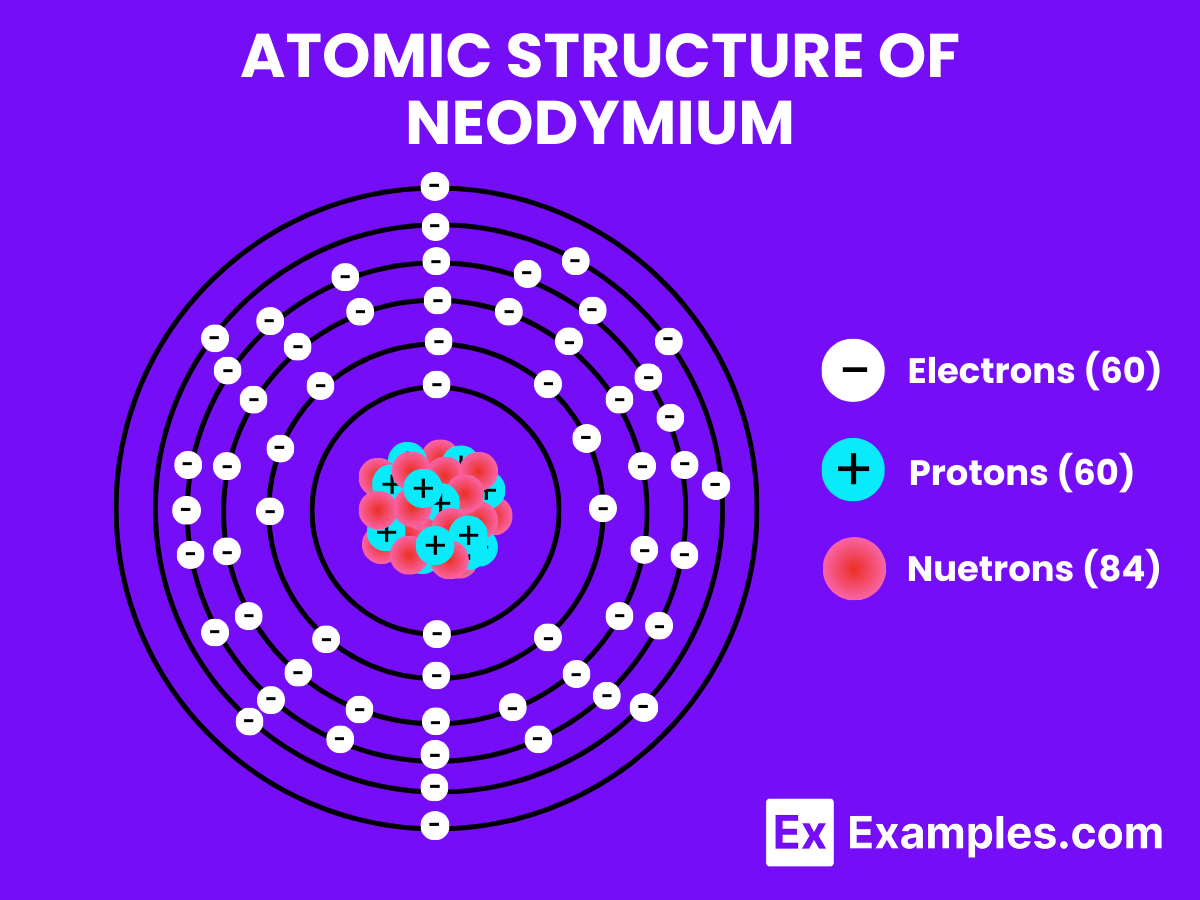
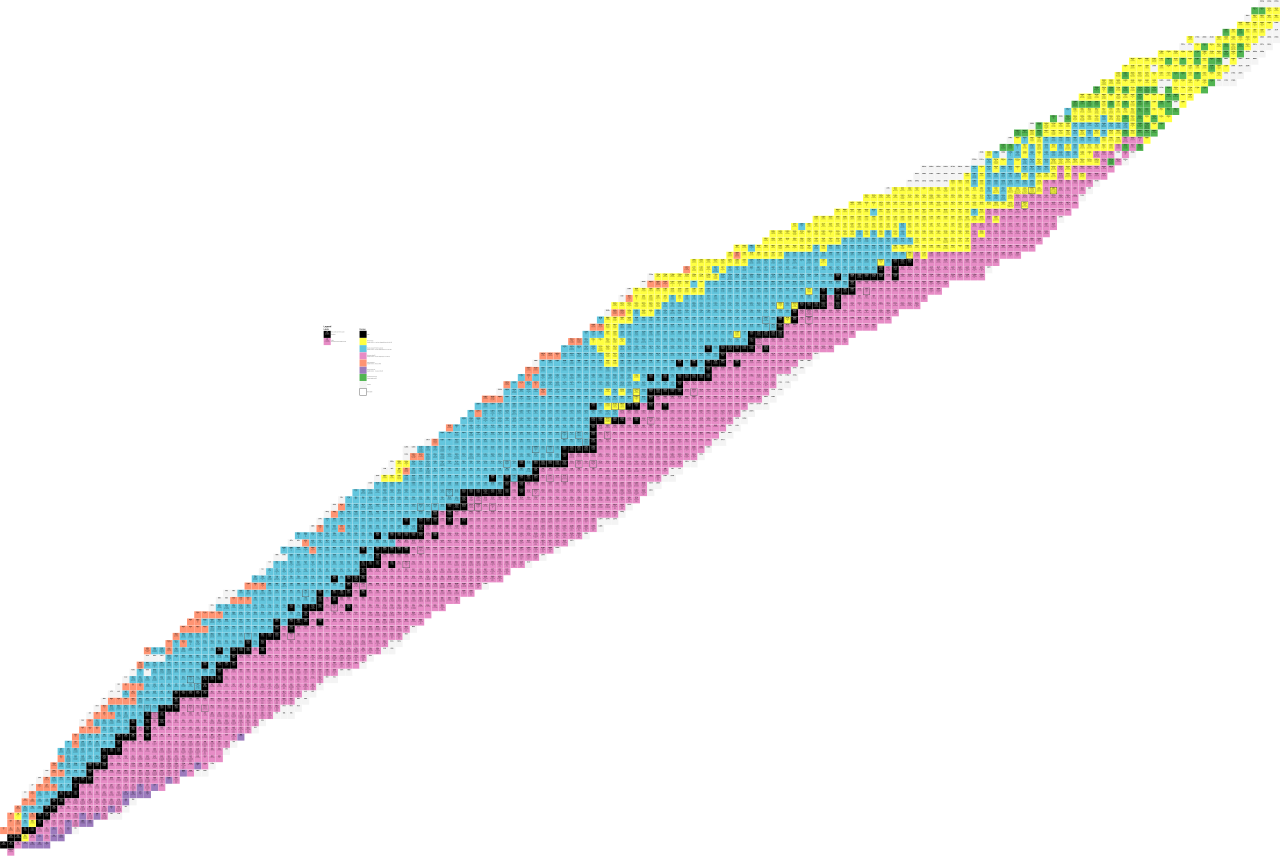
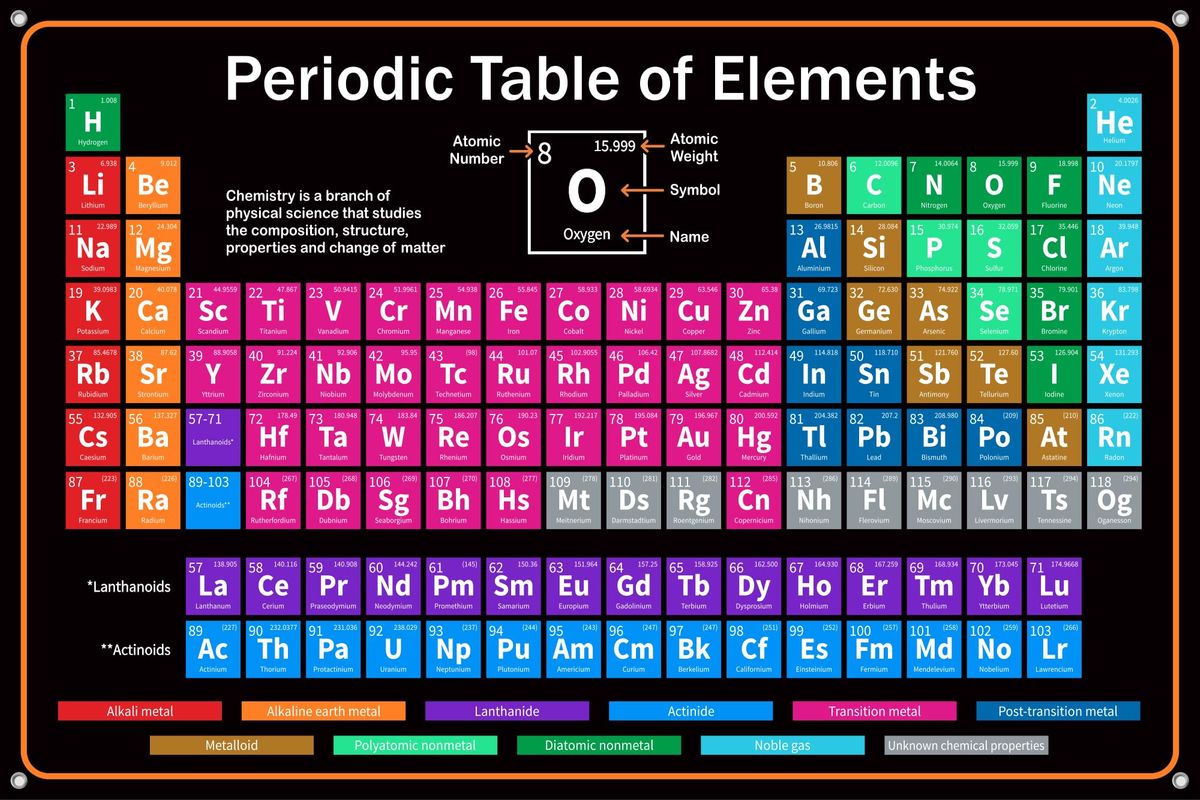
According to wide accepted rule of presenting nuclear reactions, one can write an abbreviated notation, as it is much more convenient to handle.
This is: M (a,b)M *
M = the bombarded nucleus
M* = M with asterisk indicates the product is radioactive
a = is the bombarding particle
b = is the emitted particle
This notation for Aluminum is then as follows:
28 Al (p,e) 28 Si
13 14
The abbreviated notation for the bombardment of
with α-particles, are:
a) 25 Mg (α, p) 28 Al
12 13
b) 14 N ( α,p) 17 O
7 8
c) 239 Pu (α , n) 242 Cm
94 96
Dissemination and distribution of Artificial Radionuclides
a) Radionuclides by intent
b) Radionuclides by incidents/ accident
By Intent
Through nuclear technology like nuclear reactors / power reactor, accelerators as well as laboratory research experiments, nuclear waste repository, scientists and nuclear technologists produce radionuclides or radioactive species. These radionuclide species come from civil commercial, medical, military research application area.
By accident
Unwillingly or reluctantly radioactivity escapes and enters the environment. Three Mile Island, Harrisburg (Pennsylvania) USA 1979; Fukushima, Daiichi in Japan 2011; Chernobyl in Ukraine 1986 are few examples. Finally, the undeclared nuclear accident Euro-Asia located in the southern Urals (Russia) in 2017 and few more others can be mentioned here.
How many Nuclides are registered currently?
Although the Chart of the Nuclide includes about 2500 different nuclides, current models predict that at least 4000 more could be discovered. According to nuclear and isotopic scientists, thousands of nuclei have been observed in nature or in the laboratory. About 1700 nuclides are known, of which about 300 are stable and do not decay. Those radionuclides which decay spontaneously or slowly possess emission characteristic (Alpha, Beta, Gamma) and they are radioactive. There are many more possible nuclides, for a total of perhaps 5000 species, but these additional isotopes have a very short half life that they have not been observed in the laboratory.
Decay
Radioactive decay occurs when an unstable atomic nucleus spontaneously changes to a lower energy state and spits out a radiation. This process changes the atom to a different element or a different isotope. Those radioactive isotopes, decay in two processes. Some nuclei are stable don’t decay, but most are radioactive and decay into other nuclei by emitting characteristic radiation. For all radionuclide of interest, it is important to have accurate and comprehensive information about decay processes, half lives, and characteristic emissions.
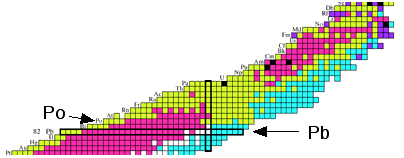
Po Pb
Alpha Decay: We can take Polonium decay as an example: 210Po 206 Pb + 4He. The Polonium nucleus has 84 protons and 126 neutrons. The ratio of protons to neutrons is Z/N = 84/126 = 0.667. A 206 Pb nucleus has 82 protons and 124 neutrons, which gives a ratio of 82/124, = 0.661 This small change in the Z/N ratio is enough to put the nucleus into a more stable state. With this process, the daughter nucleus, which is the decay product is brought into the region of stable nuclei. In alpha decay, the atomic number changes so the original (or parent) atoms and the decay Product (or daughter) atoms are different elements and therefore have different chemical properties.
Half-life of Radionuclides
N(t) = No. e - l t
t⅟2 = ln2/λ
Another basic property of nuclei is life time. In this case the half life. The half life is the time required for half of the original nuclei (an initial sample) of radioactive isotopes to decay away. If more than one decay mode is available for nuclide, the total λ will be the sum of decay rates for each of the decay channels for instance: First decay mode, second decay mode etc. In order to better understand the physics of nuclear structure and because of the technological importance of radioactivity, the decay rates and radioactive emissions from unstable nuclei have been studied intensively. The time required for one-half of the atoms in a sample to disintegrate is called half-life. In this context, two factors are highly essential to know. Rate and number of atoms. The rates at which the disintegrations of the various radioactive elements take place vary widely. However, the number of atoms that undergo change per unit of time is a constant fraction of the total number of atoms present. Here follows few examples:
i) The half-life of radium (Ra) 226 Ra is, 1590 years
88
ii) The half-life of radium (Rn) 222 Rn is, 3.82 days
86
iii) The half-life of polonium (Po) 218 Po is, 3 minutes
84
In case of radium, after 1590 years, only, one-half of a sample will remain unchanged, and at the end of another 1590 years, in other words, after all together 3180 years, the sample will be reduced to one-fourth of its initial mass and so on.
Periodic Table
The periodic table is arranged to group elements by increasing proton number and by chemical properties directly tied to how electrons are arranged around the nucleus. In other words, the periodic table demonstrates chemical change, which is the transformation of one form of matter into another considering the electronic structure. In analogy with the periodic table of the elements or of the atoms, there is a nuclide chart. The nuclide chart shows the element by their nuclear properties. With increasing numbers of N (Neutron Number) as the vertical axis and Z (Proton Number) as horizontal axis.
Chart of Nuclide
The Chart of the Nuclides contains: atomic structure, Charge, Over view of all known Nuclei, Nuclear Reactions with:

• Alpha Particles
• Deuterons
• Protons
• Neutrons
• Gamma Radiation
• Half-life
• Nutroncross-section
• Mod of decay
As it is shown above, the nuclide chart is a two-dimensional graph of isotopes of the elements, in which one axis represents the number of neutrons (symbol N) and the other represents the number of protons (atomic number, symbol Z) in the atomic nucleus. Each point plotted on the graph represents a nuclide of a known or hypothetical chemical elements.
Gamma ray (γ) and X-ray
The term gamma ray is usually for photons, produced in the nucleus. In other words, gamma rays are energetic photons, produced in the nucleus (same as Light). Whereas x-ray are high energetic photons produced by the electrons transition in the atom. X-rays usually have lower energies than gamma rays. Gamma rays can penetrate deeply into matter, especially for high energies. Therefore, they can be useful for medical radiation therapy and they can be harmful when people are exposed by the accident.
Comparison between X-Ray and γ-Ray
X-Ray | γ-Ray | |
Energy | 70MeV | High Energy |
Penetration | Low penetration | Deeper penetration |
Production | Through Electron Transition | As photon in the Nucleus |
Medical application | Radiation | Radiation |
|
|
|
Neutrons
Neutrons are one of the basic components of the nuclei atoms. They posses neither positive nor negative charge. Therefore, similar as the case of γ-rays they can penetrate through materials easily. Both neutrons and γ-rays are useful and dangerous as well. Neutrons can induce nuclear reactions readily and hence they are products of several nuclear reactions. Neutrons have immense technological and medical applications. They are especially important in a military technology as mediator of the “chain reaction”, which makes both nuclear power and nuclear weapons possible.
NEUTRON
Nuclear Weapons |
Nuclear Power |
Protons
Protons are also like neutrons main component of the nuclei of atoms. The mass of protons is equivalent to the mass of neutrons. In other words, they have about the same mass as neutrons. In contrary to neutrons, they possess a positive charge of one unit (1). They have shorter ranges than neutrons of similar energy. Naturally, they interact strongly, with electrons in normal matter. Beams of energetic protons can be produced by accelerators and they have been used for medical therapy
Heavy Ions
Heavy Elements are elements with atomic number greater than 92. The first heavy element is Neptunium (Np) with an atomic number of 93. Latter an element Oganesson chemical symbol (Og) with 118 proton and 176 neutrons making an atomic mass of 294 was invented. All those ions heavier than the alpha particles are produced in reactors, and some of them are produced artificially in cyclotron. They are tremendously important in scientific research and have several practical applications. Throughout the nuclear data field, they are expressed in Kiloelectron Volt (KeV), Megaelectron Volt (MeV) and in Gigaelectron Volt (GeV) units
Barn
The probability that a nuclear reaction will take place is measured in units of “barns”. 1 barn is equal to 10 -24 cm 2. It is a unit of Area. Barn is required because of the nuclear cross section.
History of Radioactivity / Nuclear Chemistry
Who are the pioneers of Radioactivity, Radio and Nuclear Chemistry?
To mention a few, 1895 Wilhelm Roentgen, 1896 A.H. Becquerel, 1897 J.J Thomson, 1911 Rutherford, 1913 Niels Bohr, Otto Hahn, Fritz Strassmann,1910 Marie and Pierre Curie, Frederick Soddy,
Nobel Prize in Nuclear Science
Many Nobel Prizes have been awarded for Nuclear Research and Instrumentation. Particle Physics, Nuclear Astrophysics, Nuclear Power Reactors, Nuclear Medicine, and nuclear weapons. After the discovery of polonium and radium and their radiation, Madame Curie was given the Nobel Prize for Chemistry in 1911 and, a Nobel Prize for physics in 1903.
Production of New Elements
Not only have many of the known elements have been transmuted one into another by artificial nuclear changes, but a considerable number of new elements have been synthesized in the laboratory. These includes elements 43, technetium (Tc) ; element 85, astatine(At), element 87, francium (Fr); and element 61, promethium (Pm).
Prior to 1940 the heaviest known element was uranium, atomic number 92. In 1940, Mc Millian and Abelson were able to make element 93, neptunium (Np) by bombarding uranium with high velocity deuterons. The nuclear reaction is given by:
238 U + 2 H 239 U + 1 H
92 1 92 1
239 Np + 0 e
93 -1
Neptunium is also radioactive, with a half life period of 2.3 days, and converts to plutonium (Pu), atomic number 94.
239 Np 239 Pu + 0 e
93 94 -1
Transuranium Elements
Elements from 93 through 103 are known as the trans uranium elements, and all elements from 95 through 103 have likewise been prepared artificially.
By observing the decay chain of the descendant nuclei, scientists discovered element 104 through 118 only a few atoms of these elements were produced.
The following are Heavy element names that are approve by IUPAC
Source: (Nuclear Science, Nuclear Science Wall Chart)
Element Number | IUPAC Proposal | Symbol |
101 | Mendelevium | Md |
102 | Nobelium | No |
103 | Lawrencium | Lr |
104 | Rutherfordium | Rf |
105 | Dubnium | Db |
106 | Seaborgium | Sg |
107 | Bohrium | Bh |
108 | Hassium | Hs |
109 | Meitnerium | Mt |
110 | Darmstadtium | Ds |
111 | Roentgenium | Rg |
112 | Copernicium | Cn |
113 | Nihonium | Nh |
114 | Flerovium | Fl |
115 | Moscovium | Me |
116 | Livermorium | Lv |
117 | Tennessine | Ts |
118 | Oganesson | Og |
Typical transmutation reactions by which the transuranium elements have been produced are as follows:
239 Pu + 1 n → 240 Pu
94 0 94
240 Pu + 1n → 241 Pu
94 0 94
241Am + 0 e
95 - 1
239 Pu + 4 He 242 Cm + 1 n
94 2 96 0
241 Am + 4 He 243 Bk + 2 1 n
95 2 97 0
242 Cm + 4 He 245 Cf + 1 n
96 2 98 0
238 U + 15 1 n 253 Es + 7 0 e
92 0 99 -1
239 Pu + 15 1 n 254 Fm + 6 0 e
94 0 100 - 1
253 Es + 4 He 256 Md + 1 n
99 2 101 0
246 Cm + 12 C 254 No + 4 1 n
96 6 102 0
250 Cf + 11 B 257 Lr + 4 1 n
98 5 103 0
Glen T. Seaborg
Leading nuclear scientists like Glenn T. Seaborg, have suggested the extension of the Periodic Table in order to include new elements whose synthesis was considered to be possible. The main content of the preparation of the Periodic Table is the consideration of filling energy shells and sub-shells of the elements respectively. Seaborg suggested to call elements beyond the inner transition or actinide series, as trans-actinide elements. It became possible to locate the position of elements 104 through 121 and in the style of Mendeleev, to predict their chemical properties by comparing them with their analogs in the Periodic Table. Element 104, 105,106 107 have been synthesized quite long ago.
Element 104 should be an analog of hafnium; element 105 an analog of tantalum and so forth until element 118, a noble gas analogous to radon is reached. The most striking feature of Seaborg’s extension of the Periodic Table was the addition of another inner transition series of elements stating with atomic number 121 and extending through the atomic number 153. He called this grouping the super actinide series. To the actinide series belong all elements of atomic numbers starting from 89 up to 103.
Element 121 can be considered as receiving the first 7d electron (n= 7 major shell being the second from the outside) analogous to scandium, yttrium, lanthanum and actinium.
Super actinide Series
Super actinides (plural) series is a group of elements that have predicted properties that may be similar to those of the original actinides. The super actinides are located under the actinides in the periodic table and they belong in period 8. They start with element 121, which is believed to be relatively stable.
Alpha, Beta, Gamma Particles / Rays
Alpha (α) Particle
The spontaneous disintegration of the radium nucleus shows the loss of Alpha Particles (α). This alpha particle consists of two protons and two neutrons (a mass of four units), is identical to helium nuclei. The loss of α particle decreases the atomic number from 88 to 86 and the mass number from 226 to 222. The loss of two protons from the nucleus is accompanied by the loss of two electrons from the electron shells of the atom, whereby the electrical balance in the atom is retained. Part of the radium atom remaining after the emission of the alpha particle is an atom of radon. Radon atoms also decompose spontaneously and form atoms of polonium (element 84) each losing one alpha particle.
226 Ra 226 Rn + 4 He (α – particle)
88 86 2
Beta (β) Particle
Beta particle consist a high velocity electrons. When it is ejected from the nucleus, a process takes place which is as though a neutron in the nucleus decomposes to give a proton and electron according to this equation.
1 n 1 H + 0 e
0 1 -1
The proton remains in the nucleus, but the electron is ejected at high velocity. The formation of proton in the nucleus increases the net positive charge on the nucleus by one unit, and thus the atomic number is increased by one unit. The ejection of an electron from the nucleus of an atom causes no appreciable change in the mass of the nucleus because the mass of the electron is relatively very small. This is evident, for example in the equation for the transformation of an isotope of thorium to one of protactinium, which is accompanied by the emission of an electron from the nucleus. Note that the mass numbers for both nuclides are the same.
232 Th 232 Pa
90 91
Gamma rays (γ) / Gamma Particles
The emission of either alpha or beta particles may be accompanied by gamma radiation. For instance, as it is shown above, the spontaneous disintegration of radium, by alpha emission, produces radon.
The 222 Rn emits gamma particles.
86
222 Rn 222 Rn + γ
86 86
Gammas are electromagnetic waves, which penetrate more than alpha and beta particles, and are little bet identical to x-rays in character, but posses somewhat shorter wavelength. The emission of gamma rays does not alter either the atomic number or the mass number of an atom, because gamma-rays posses neither mass nor charge. Their emission is associated with energy changes within the nucleus.
Stable and Unstable Nucleus
Stable Nucleus
A nucleus is stable, if it cannot be transformed into another configuration without the addition of energy from the outside. The nucleus stability diagram (stability curve), which contain the plot of the number of protons and the number of neutrons, shows the position of the stable nuclei. Lighter stable nuclei, have equal numbers of protons and neutrons. Excellent example in this case is nitrogen. Nitrogen 14 has seven protons and seven neutrons. Whereas heavier stable nuclei have somewhat larger numbers of neutrons than protons. Example: Iron and lead. Fe-56 has 26 protons and 30 neutrons. Pb-207 has 82 protons and 125 neutrons.
Unstable Nucleus
All other isotopes which fall to the left or right of the stability curve, have unstable nuclei and are referred as radioactive. It should be noted that all isotopes with atomic number higher than 83 are radioactive.
Radioactive Disintegration Series
All elements with atomic numbers larger than 83 (that of bismuth) have one or more isotopes which are radioactive. A few elements of lower atomic number such as potassium and rubidium have naturally occurred isotopes. They also are radioactive. The naturally occurring radioisotopes of the heavier elements belong to chain of successive disintegration or decays, and all the species in one chain constitute a radioactive family or series. They are the uranium series, the actinium series, and the thorium series. Each series is characterized by a parent (first member) of long-half life and a series of decay processes which ultimately lead to a stable end product. In all three natural series, the end products are isotopes of lead:
206 Pb in the uranium series, 207 Pb in the actinium series and 208 Pb in the thorium series.
82 82 82
The natural disintegration has displacement laws, originally formulated by Rutherford, Soddy, and Fajans:
a) When an atom emits α particle, the product is an isotope of an element two places to the left of the parent element in the Periodic Table.
b) When a β particle, is emitted, the product is an isotope of an element one place to the right of the parent in the Periodic Table.
The steps in the thorium series are given in the following table as an illustration of one natural radioactive decay series.
Production of New Elements
Nuclear Fission
In nuclear fission large nuclei break apart to form smaller ones, releasing a large amount of energy. Fission is used in nuclear power plants to generate energy.In the year 1939, two German scientists, Hahn and Strassmann reported when they bombarded uranium with slow moving neutrons, the uranium-235 atoms split into smaller fragments consisting of elements about the middle of the Periodic Table. Among the fission products identified were barium, krypton, lanthanum and cerium, the nuclei of all which are more stable than that of uranium. In the fission of uranium, a low velocity neutron causes the splitting of the uranium isotope of mass number 235 into fission products and several neutrons.
235 U + 1 n Fission fragments (isotopes of Ba, Kr, etc.) + 2.5 n + Energy
92 0
The sum of the atomic numbers of the fission products is 92, the atomic number of the original nucleus.
Beta Emission Process
The beta emission process depends from the neutron-proton ratio. The neutron: proton ratio decreases during β - [ beta( –) emission] decay. β + [ beta (+) emission], or positron emission is a process in which a nucleus emits a positron –the antimatter counterpart of an electron. For instance, in magnesium 23, there are 11 neutrons and 12 protons. The neutron: proton ratio increases during positron decay. 12 Mg.
23
Neutron: Proton Ratio or (N/Z Ratio)
Radioactive decay generally proceeds so as to change the neutron /proton (N/Z) ratio to increase stability. If the N/Z ratio is greater than1, alpha decay increases. The N/Z ratio and hence provides a common pathway towards stability for decays involving large nuclei with too few neutrons. Positron emission and electron capture also increase the ratio, while beta decay decreases the ratio. Nuclear waste exists mainly because nuclear fuel has a higher stable N/Z ratio than its fission products.
Nuclear Fusion
In nuclear fusion small nuclei are combined to form a large nucleus. This process releases a very large amount of energy and is the main source of energy in the sun.
The nuclear binding energy of heavy atoms may be increased by fission into fragments of lower mass numbers. Such nuclear fissions are accompanied by the liberation of extremely large amounts of energy. The conversion of very light nuclei into heavier nuclei, is followed by the transfer of mass into a large amount of energy. Such reactions are known as a nuclear fusion and are the basis of an intensive research effort to develop a practical thermonuclear reactor. It is supposed that the principal source of energy of the sun is the fusion of four hydrogen nuclei into one helium nucleus. Four hydrogen nuclei have a greater mass (0,7 per cent) than the helium nucleus, so the fusion converts the extra matter into energy.
Techniques and Tools of Nuclear Science / Chemistry
• Accelerators
• Cyclotrons
• Nuclear Reactors
• Research Reactors
• Detectors
• Microcomputers
Applications of Nuclear Science/ Nuclear Chemistry For what is it good for?
• Nuclear Medicine (Radioisotopes for diagnosis and treatment)
• Radioisotope Production
• Environment
• Materials
• Radioactive Dating
• Neutron Activation Analysis
• Industrial Application
• Removal of Land Mines
• Radioisotope Power Generation
• Nuclear Weapons
• Space Applications: Radiation-Induced Effects
• Material Studies
• Biology Studies
Instrumentation in Nuclear Chemistry
• Radiochemical Methods (Detection, Measurements)
• None radiochemical Methods (Spectroscopy, Chromatography,)
Sources
1) College Chemistry with Qualitative Analysis
NEBERGALL.SCHMIDT. HOLTZCLAW
D.C. HEATH AND COMPANY
2) Nuclear Science -A Guide to the Nuclear Science Wall Chart
©2019 Contemporary Physics Education Project (CPEP)
Fifth Edition -October 2019
3) Chart of the Nuclides
Karlsruher Nuclide Chart 10.Auflage 2018
J.Magill IR.Dreher I Zs.Söti
4) europosters : Periodic Table
5) nuclear.csdb.cn/ nuclear
4) Loughborough University
MSc, PhD Courses Manuscripts, Nuclear Chemistry Department